

Best Kayak Fishing Gear For Labor Day 2026
🏆 Top Picks at a Glance
 #1
Best Overall
Buffalo Gear Kayak Fishing Cooler,36in Portable Kayak Cooler for Caught Fish,Leak Proof Kayak Fishing Kill Bags with Shoulder Strap
$158.99
Check Price → #2
Runner Up
LUCKY Kayak Portable Fish Depth Finder Water Handheld Fish Finder Sonar Castable Kayak Boat Fishfinder Transducer Fishing LCD Display FFC1108
$42.99
Check Price →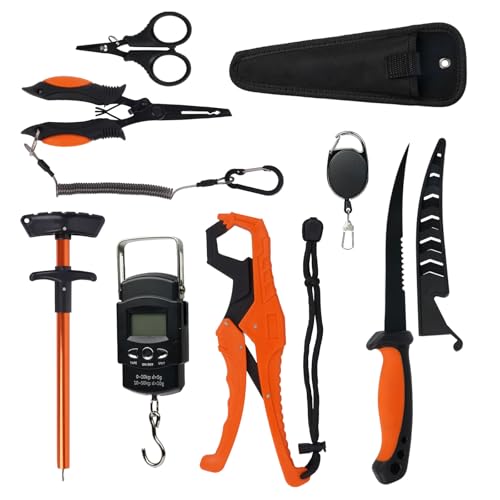 #3
Best Value
Fishing Accessories Kit for Men, Fishing Gear Set with Fillet Knife, Hook Remover, Fish Grip, Line Cutter, Scale, Pliers with Lanyard, Saltwater & Ice Fishing Equipment, Orange, No Batteries Included
$22.99
Check Price →Labor Day is a good excuse to organize the parts of a fishing kayak that matter once a fish is alongside the boat. This roundup focuses on five practical add-ons: a cooler for handling the catch, a handheld fish finder for checking depth, a kit for cutting line and handling hooks, a cup holder for drinks or a phone, and a track-mounted tool holder for keeping fishing gear within reach.
⚡ Quick Answer: Best Kayak Fishing Gear
Best for Keeping Fish Cool: Buffalo Gear Kayak Fishing Cooler
$158.99 — Check price on Amazon →
Table of Contents
Main Points
- Put safety and control ahead of convenience: a snug fishing PFD, whistle, and line-cutting knife should come before electronics or extra tackle storage, and a paddle leash can keep a dropped paddle from drifting out of reach.
- Match fish-handling gear to the trip. A cooler or kill bag can help manage a catch, while a fish grip, scale, pliers, hook remover, and fillet knife are most useful when they can be secured with a lanyard and reached without twisting out of position.
- Use a fish finder as a structure-finding tool, not a substitute for reading water. The LUCKY handheld unit is aimed at locating depth changes and underwater features, but its electronics should be paired with a small battery and protected in a dry bag or waterproof case.
- Keep frequently used items from becoming deck hazards. The YAKHACKER cup holder and VOXZENG T-track tool holder are best evaluated by mount compatibility, reach, and resistance to toppling; a crate can also organize tackle and support rod holders without scattering gear across the cockpit.
- Choose propulsion and paddle hardware for the water you actually paddle. One Outdoors reports typical pedal-drive speeds of about 3–5 mph versus roughly 3–4 mph for paddle-only kayaks, but a pedal drive adds substantial weight and cost; for paddle setups, prioritize a stiff, efficient blade for fishing and touring, a controlled-flex shaft for comfort, and a durable design suited to recreational water rather than technical whitewater.
Our Top Picks
Affiliate disclosure: if you buy through these links, we may earn a commission at no extra cost to you.
Factors to Consider
Frequently Asked Questions
Is a sit-on-top kayak better for fishing?
For most anglers, yes. Sit-on-top kayaks generally provide more stability, easier self-rescue, and better access to tackle, rods, and landing nets than sit-in models; One Outdoors reports that about 95% of fishing kayaks are sit-on-top designs.
Should I choose a paddle kayak or a pedal-drive kayak?
Choose a paddle kayak when low weight, simple maintenance, and easy transport matter most. A pedal drive is especially useful for active fishing because it lets you reposition against wind or current and adjust your casting angle while keeping both hands available.
How much faster is a pedal kayak than a paddle kayak?
The difference depends on hull design, wind, current, and the paddler, so advertised speed should not be treated as a guarantee. One Outdoors reports typical speeds of approximately 3–4 mph for paddle-only kayaks and 3–5 mph for pedal-drive kayaks.
What safety gear should I carry on a fishing kayak?
At minimum, wear a properly fitted PFD and carry a whistle and line-cutting knife where they can be reached without opening a large tackle box. Add a phone or communication device in a waterproof case, and bring the signaling and navigation equipment appropriate for the water and weather you expect.
Do I need a kayak crate for fishing?
A crate is not mandatory, but it is one of the easiest ways to organize tackle boxes and secure rod holders in the rear tank well. Choose a crate that fits the kayak securely and leaves room to reach your paddle, net, and safety gear without twisting excessively.
Are scupper kayak carts safe for every fishing kayak?
No. Scupper-style carts should only be used on kayaks specifically designed to accept them, since forcing the posts into incompatible scupper holes may damage the hull. If the manufacturer does not approve that style, use a properly sized frame-style cart instead.
What accessories make the biggest difference on a fishing trip?
A paddle leash, dry bag, landing net, measuring board, and anchor trolley solve common problems without adding much complexity. Once those basics are covered, a fish finder can be a high-value upgrade for locating depth changes and underwater structure, provided its battery and electronics are protected in a waterproof case or dry bag.
Conclusion
The best kayak fishing setup is not the one with the most accessories; it is the one that stays stable, tracks predictably, carries safely, and keeps essential gear within reach. For most anglers, start with a sit-on-top kayak, properly fitted PFD, dependable paddle, leash, dry storage, and organized crate, then add a pedal drive, anchor trolley, or fish finder when your water and fishing style justify the extra weight and cost.


