

NRS Kayak Paddle Leash vs YakAttack Paddle Leash: Which is Best for Spring Kayaking Trips in 2026
By Sam Kowalski
If you have ever watched your paddle float away on a calm morning, you know the specific heartbreak of losing gear to the water. It happens faster than you can blink. Whether you are fishing off the back of a stable sit-on-top or navigating the choppy wakes of a lake, securing your paddle is non-negotiable. But not all leashes are created equal. Some get tangled in your legs, others snap under the strain of a sudden dip, and some simply don't fit your specific paddle shaft.
In this comparison, we are putting two heavy hitters from the kayak world against each other: the NRS Coil Paddle Leash and the YakAttack Paddle Leash. I have spent years testing gear on everything from flatwater rivers to surf zones. We are going to look at materials, ease of use, and real-world durability to help you decide which one belongs on your kayak.
Table of Contents
- Our Top Picks
- Quick Verdict
- About NRS Kayak Paddle Leash
- About YakAttack Paddle Leash
- Head-to-Head: Ease of Use
- Head-to-Head: Durability and Materials
- Head-to-Head: Fit and Compatibility
- Who Should Choose NRS Kayak Paddle Leash?
- Who Should Choose YakAttack Paddle Leash?
- Our Verdict
- Frequently Asked Questions
Our Top Picks
Affiliate disclosure: if you buy through these links, we may earn a commission at no extra cost to you.


Quick Verdict
Choose NRS Kayak Paddle Leash if...
- You want a universal fit that works with almost any paddle shaft diameter.
- You prefer a simple, no-fuss coil design that stretches and retracts smoothly.
- You need a proven, widely available option with excellent customer support.
- You are paddling in conditions where you might need to detach quickly (like whitewater or tight spaces).
Choose YakAttack Paddle Leash if...
- You already use YakAttack gear and want a unified ecosystem for your kayak.
- You prefer a more rigid, structured attachment point that doesn't dangle.
- You want a leash specifically designed to integrate with their GoMount system.
- You prioritize a sleek, low-profile look on your kayak.
| Factor | NRS Coil Paddle Leash | YakAttack Paddle Leash |
|---|---|---|
| Price Range | $15 - $25 | $20 - $30 (varies by bundle) |
| Best For | Universal kayaking, fishing, and touring | YakAttack ecosystem users, fishing |
| Setup Difficulty | Very Easy (wrap and clip) | Easy (requires compatible mount) |
| Reliability | High (simple mechanical design) | High (robust construction) |
| Key Advantage | Universal fit and quick-release mechanism | Integrated mounting system |
| Main Drawback | Coil can tangle if not managed | Less universal; tied to YakAttack mounts |
About NRS Kayak Paddle Leash
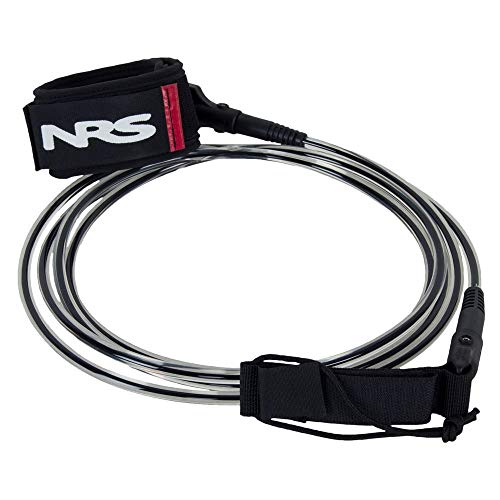
NRS (Northwest River Supplies) has been a staple in the paddling community for decades. Their Coil Paddle Leash is a fan favorite for good reason. It features a simple, effective design: a coiled cord that attaches to your paddle shaft via a secure clip and connects to your kayak via a carabiner or tie-down point. The coil design is crucial because it allows the leash to stretch as you paddle, preventing that annoying "tug" when you reach for something or adjust your position.
What I appreciate most about the NRS leash is its universality. It works with virtually any paddle shaft, whether you are using a cheap big-box store paddle or a high-end carbon fiber model. The materials are tough—UV-resistant cord and sturdy plastic clips that don't crack in the sun. For anglers, the quick-release feature is a lifesaver; if your paddle gets snagged on a submerged branch, you can detach it in a split second rather than losing the whole paddle.
However, the coil design isn't perfect for everyone. If you are prone to tangling, the loose coil can wrap around your legs or other gear if not stored properly. It is also a more "visible" accessory, which some paddlers find aesthetically pleasing while others prefer a cleaner look.
About YakAttack Paddle Leash
YakAttack has built a reputation on creating a modular ecosystem for kayak fishing. Their Paddle Leash is designed to integrate seamlessly with their GoMount system, which many anglers already have installed on their kayaks. Instead of a free-hanging coil, the YakAttack leash often features a more structured attachment that clicks into their proprietary mounts, offering a very clean and organized look on the water.
The build quality is exceptional. YakAttack uses high-density polymers and robust stainless steel hardware that can withstand the saltwater environment. The leash itself is designed to be durable and resistant to abrasion from the paddle shaft. For anglers who spend hours in the sun and salt, this durability is a significant plus.
The main limitation is compatibility. If you do not have YakAttack mounts on your kayak, you will need to purchase their specific hardware to use this leash effectively. It is not as "grab-and-go" as the NRS option if you are switching kayaks frequently. It is best suited for anglers who have a dedicated kayak setup and want a unified gear system.
Head-to-Head: Ease of Use
When you are sitting in your kayak, trying to attach a leash with wet hands while balancing on unstable water, simplicity is key. The NRS Coil Paddle Leash wins here for pure ease of use. You wrap the cord around the paddle shaft, clip it on, and attach the other end to your kayak. It takes less than five seconds. There are no proprietary parts to worry about, and the carabiner clip is intuitive.
The YakAttack leash is also easy to use, but only if you are already set up with their system. If you are, the "click" of the mount into the GoMount is satisfying and secure. However, for beginners or those without existing YakAttack gear, the setup process is more involved. You need to ensure your mounts are in the right place and compatible. For quick, hassle-free paddling, NRS is the more user-friendly option.
Head-to-Head: Durability and Materials
Both brands use high-quality materials, but they approach durability differently. NRS focuses on UV-resistant cordage and impact-resistant clips. The coil is designed to handle thousands of stretches without losing its elasticity. In my experience, NRS clips can wear out over time if used with rough-edged paddle shafts, but they are easily replaceable.
YakAttack leans into their ecosystem's durability. Their hardware is often made from higher-grade polymers and stainless steel, making it more resistant to corrosion and UV degradation. If you are fishing in saltwater, YakAttack's hardware tends to hold up better over the long term. However, if you break a YakAttack component, you might need to buy a specific replacement part from their catalog, whereas NRS parts are more universally available.
Head-to-Head: Fit and Compatibility
This is where the biggest difference lies. The NRS leash is universal. It fits paddle shafts ranging from standard aluminum to thick carbon fiber. It also has multiple attachment points on the kayak, giving you flexibility in where you place it. This makes it ideal for paddlers who switch between different kayaks or paddles.
The YakAttack leash is designed specifically for their GoMount system. If you have YakAttack mounts, it fits perfectly. If you do not, you will need to purchase additional hardware. This lack of universality can be a drawback for casual paddlers who want a simple, one-size-fits-all solution. However, for dedicated YakAttack users, the fit is precise and secure.
Who Should Choose NRS Kayak Paddle Leash?
Choose the NRS Coil Paddle Leash if you are a general paddler, a beginner, or someone who switches between different kayaks and paddles. It is perfect for recreational paddlers who want a reliable, affordable, and easy-to-use leash. If you fish in freshwater and saltwater and need a universal solution that works with any paddle, NRS is the way to go. It is also a great choice if you prefer a simple, no-fuss setup without investing in a specific brand's ecosystem.
Who Should Choose YakAttack Paddle Leash?
Choose the YakAttack Paddle Leash if you are a dedicated kayak angler who already uses YakAttack gear. If you have GoMounts installed on your kayak and want a leash that integrates seamlessly with your existing setup, this is the logical choice. It is also ideal for those who prioritize a clean, low-profile look and are willing to invest in a specific brand's ecosystem for better durability and compatibility. If you spend a lot of time in saltwater and want hardware that resists corrosion, YakAttack's materials are top-notch.
Our Verdict
For most kayakers, the NRS Coil Paddle Leash is the better all-around choice. It is affordable, universal, and incredibly easy to use. Whether you are fishing, touring, or just paddling for fun, NRS delivers a reliable product that works right out of the box. It is the "set it and forget it" solution that lets you focus on the water, not your gear.
However, if you are a serious kayak angler who has already invested in the YakAttack ecosystem, the YakAttack Paddle Leash is a worthy upgrade. It offers superior durability and a sleek, integrated look that complements your other YakAttack gear. Just be sure you have the compatible mounts before purchasing.
Frequently Asked Questions
Can I use the NRS leash with a SUP paddle?
Yes, the NRS Coil Paddle Leash is designed to fit most paddle shafts, including those on Stand Up Paddleboards. However, ensure the clip size matches your shaft diameter.
Does the YakAttack leash work with non-YakAttack mounts?
No, the YakAttack Paddle Leash is specifically designed to click into YakAttack GoMounts. You will need their mounts to use it effectively.
Will the NRS coil tangle around my legs?
It can, if you are not careful. The coil is designed to stretch and retract, but if it gets caught on your knee or gear, it can tangle. Store it neatly when not in use to avoid this.
Which leash is better for saltwater fishing?
YakAttack's hardware is generally more resistant to corrosion due to its stainless steel and high-grade polymer construction. However, rinsing any leash with fresh water after saltwater use will extend its life.
How do I attach the NRS leash to my kayak?
You can use the included carabiner to clip it to a D-ring, a tie-down point, or even a bungee cord on your kayak. It is very versatile.


