

Dry Bags vs Kayak Carts: Which Should You Buy in 2026
Dry bags and kayak carts solve two completely different problems. A dry bag protects the gear inside your kayak from spray, rain, and the occasional capsize. A cart helps move the kayak from the vehicle to the water without forcing you to carry the full hull and fishing setup by hand. Choosing the wrong one can leave you with a waterproof phone but an exhausting half-mile portage, or an easy launch but soaked clothes and dead electronics.
This comparison is for recreational paddlers, kayak anglers, and anyone deciding what accessory deserves the next spot in the gear budget. Blade material, shaft flex, and long-paddle comfort matter when you are choosing a paddle; dry bags and carts matter before launch and when conditions get wet. If you understand which problem is slowing down your trips, the decision is fairly clear.
Affiliate disclosure: if you buy through these links, we may earn a commission at no extra cost to you.
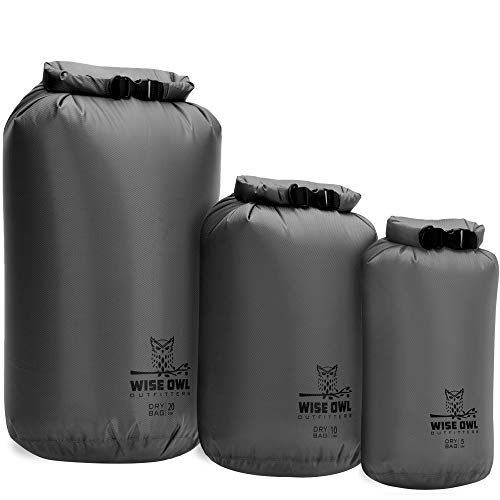

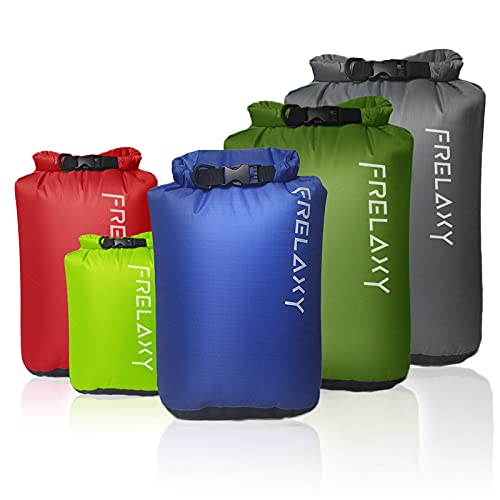
Table of Contents
- Our Top Picks
- Quick Verdict
- About Dry Bags
- About Kayak Carts
- Head-to-Head: Protection Versus Transport
- Head-to-Head: Setup and Portability
- Head-to-Head: Water Exposure and Reliability
- Head-to-Head: Durability and Trip Type
- Who Should Choose Dry Bags?
- Who Should Choose Kayak Carts?
- Our Verdict
- Frequently Asked Questions
- Sources & References
Our Top Picks
Affiliate disclosure: if you buy through these links, we may earn a commission at no extra cost to you.
Quick Verdict
Choose Dry Bags if...
- You need to protect your phone, wallet, dry layer, camera, or other essentials from spray and immersion.
- You mostly launch close to the water or already have an easy way to carry your kayak.
- You paddle fishing, recreational, or touring routes where wet gear would ruin the day.
Choose Kayak Carts if...
- Your regular launch involves a long carry from the parking area to the shoreline.
- You move a heavy fishing kayak, loaded recreational kayak, canoe, or stand-up paddleboard.
- Portage effort, not water protection, is the main reason you are avoiding certain launch sites.
| Factor | Dry Bags | Kayak Carts |
|---|---|---|
| Price Range | Varies by size, pack count, closure, and construction. Current Amazon prices change, so check the live listing. | Varies by frame design, wheels, brand, and listed capacity. Compare the current price with the fit and terrain you actually use. |
| Best For | Keeping clothing, electronics, food, and other gear dry on the water. | Moving a kayak from a vehicle or storage area to the launch point with less lifting. |
| Setup Difficulty | Low, but the roll-top must be closed correctly. PaddleRoundThePier recommends sealing a roll-top at least three times. | Moderate. The kayak must be positioned, fitted, and secured correctly before you start moving. |
| Water and Terrain Reliability | Depends on seam construction, closure type, abrasion resistance, and whether the bag is merely water-resistant or designed for submersion. | Depends on kayak fit, strap security, load rating, wheel design, and the surface between the vehicle and the water. |
| Key Advantage | Protects the gear you need after a splash, rainstorm, or accidental dunking. | Reduces the amount of kayak weight you need to lift and carry at one time. |
| Main Drawback | It does not make a heavy kayak easier to transport. | It does not protect phones, clothing, cameras, or food from water. |
About Dry Bags
A dry bag is the more useful first purchase for many paddlers because it addresses a problem that can appear on every trip: water getting into gear. For a day paddle, Kayaking.co recommends roughly 10 to 20 liters for essentials such as a phone, wallet, and dry layer. Multi-day paddlers may need approximately 30 to 60 liters, while photographers should look for a fully submersible camera-grade design rather than assuming every roll-top bag offers the same protection.
Construction matters more than a large capacity number on the label. Kayak Addicts describes the Sea to Summit Big River as using 420D nylon with TPU lamination, tape-sealed seams, a roll-top closure, and a stated 10,000 mm hydrostatic-head rating. It is listed in seven sizes from 3 to 65 liters. Its white interior fabric improves visibility, and its puncture-resistant construction and built-in Field Repair Buckle are practical features when a bag is being dragged around a rocky launch or packed into a crowded hatch.
The Amazon dry-bag shortlist supplied for this comparison includes the Wise Owl Outfitters Waterproof Dry Bag 3-Pack, Li, the Frelaxy Dry Bag 5 Pack, Ultralight Waterproof Dry, and the HEETA Waterproof Dry Bag for Women Men, Roll Top L. The titles are incomplete, so verify the live listings for exact capacity, materials, closure, and included accessories. As a reference point, the HEETA Transparent Dry Bag is listed in 5 to 40 liter sizes, includes a phone case, and was listed at 4.6 stars with more than 36,000 reviews. That review count is useful social proof, but it is not a substitute for checking seam construction and the intended level of water protection.
About Kayak Carts
A kayak cart is a portage tool. It earns its place when the distance from the vehicle to the launch is long enough, steep enough, or heavy enough to make carrying unpleasant. Instead of lifting the entire kayak for the full walk, you secure the kayak to the cart and roll it along the available path. That can be especially valuable with a fishing kayak carrying tackle, a seat, a battery, and other equipment.
The important cart questions are fit, load rating, strap security, and terrain. A cart labeled for a high load is not automatically the best choice for every kayak or every launch. The VEVOR example supplied here is labeled with a 450-pound load capacity, while another listing is labeled as a 150-pound canoe dolly with air tires. The Pelican listing is described as a universal canoe, kayak, and stand-up paddleboard cart. Treat those numbers and compatibility descriptions as listing claims to verify against your boat and route, not as a guarantee that the cart will roll easily over every surface.
Unlike a dry bag, a cart has no useful role once you are paddling. Its failure points are mechanical and practical: the kayak may not sit securely, the strap may need adjustment, the route may be too rough, or the loaded boat may be beyond the cart's intended capacity. For a smooth parking-lot-to-ramp carry, a properly fitted cart can be a major comfort upgrade. For a rocky, steep, or complicated put-in, the simplest carrying method may still be more dependable.
Head-to-Head: Protection Versus Transport
Dry bags protect what you bring. They are the right answer when the concern is a wet phone, soaked spare layer, ruined food, or water-sensitive fishing electronics. A cart protects your back and shoulders from doing all the work of moving the kayak. Neither product replaces the other because they operate at different points in the trip.
If your kayak is already easy to carry but your gear is poorly protected, buy the dry bag. If your gear is organized and protected but you dread the walk from the car to the water, buy the cart. The clearest mistake is buying a cart when the real problem is water damage, or buying several small dry bags when the real problem is a heavy hull.
Head-to-Head: Setup and Portability
Dry bags are simple to bring along. Choose the capacity, load the contents, remove excess air when appropriate, and close the roll-top correctly. PaddleRoundThePier recommends sealing a roll-top at least three times. A bag can be tucked into a hatch, secured under deck lines where appropriate, or kept within reach depending on the kayak and the contents.
A cart requires more attention before the walk begins. The boat has to be positioned on the cart, the load has to be balanced, and the securing strap has to be tight enough to prevent shifting without damaging the hull. The benefit is not that the kayak becomes lighter; the benefit is that the cart carries part of the load while you guide it. That tradeoff is worthwhile for long, predictable carries but less attractive when the cart must be repeatedly removed, repositioned, or lifted over obstacles.
Head-to-Head: Water Exposure and Reliability
Not every dry bag offers the same level of protection. Kayaking.co categorizes roll-top closures as water-resistant, ZipDry closures as intended for submersion, and zipper-only closures as mainly suitable for splash protection. That distinction matters for whitewater, surf, accidental capsizes, and camera equipment. A standard roll-top can be a sensible choice for general paddling, but it should not automatically be treated as a submersible camera case.
A cart faces a different environment. It is normally used before and after the paddle, so its reliability depends less on sealing and more on fit, load, straps, wheels, and the launch surface. A cart can be excellent on an accessible path and frustrating on deep sand, loose rock, stairs, or a steep bank. Choose the product around the actual route rather than the most impressive capacity printed in the title.
Head-to-Head: Durability and Trip Type
For demanding kayak use, abrasion resistance is worth prioritizing. Kayak Addicts highlights the Big River's puncture-resistant construction, visible white interior, and Field Repair Buckle as useful field features. PaddleRoundThePier's testing of 10 dry-bag models across calm lakes, splashy coastal paddles, and spring runoff also underscores why conditions matter: a bag that is convenient on a calm lake may face much harsher handling during runoff or a wet landing.
Recreational paddlers usually benefit from a practical 10- to 20-liter bag and a cart only if the launch carry is difficult. Anglers may eventually want both: a cart for the loaded kayak and dry storage for clothing, electronics, and other vulnerable gear. Whitewater paddlers should secure bags carefully inside the kayak and select the closure level for the immersion risk. A cart can help with access to a suitable put-in, but it is not a substitute for a stable, manageable carry route.
Who Should Choose Dry Bags?
Choose dry bags if your main concern is keeping essentials usable after spray, rain, or a dunking. For most day trips, start with a 10- to 20-liter bag for a phone, wallet, dry layer, and other basics. If you are carrying sleep equipment for several days, move toward the approximately 30- to 60-liter range. Photographers and paddlers expecting full immersion should choose a bag specifically intended to be submersible rather than relying on a zipper-only or ordinary splash-resistant design.
When comparing models, favor welded or tape-sealed seams over ordinary stitched seams, inspect the closure, and match the size to the trip instead of buying the largest bag available. A transparent bag or white interior can make small items easier to find, while a repair buckle or abrasion-resistant body can matter more than a slightly lower price on rough launches.
Who Should Choose Kayak Carts?
Choose a kayak cart if carrying the boat from the parking area to the water is the part of paddling you are starting to avoid. This is often the better first purchase for anglers with heavily loaded kayaks, paddlers using distant launch points, or anyone who regularly handles a canoe, kayak, or stand-up paddleboard alone.
Before buying, compare the cart's stated capacity with the fully loaded boat, not the empty hull. Confirm that the cart fits the hull shape, that the securing method is clear, and that the wheels suit the surfaces you actually cross. A higher capacity label can be reassuring, but it does not remove the need to balance and secure the kayak or to consider the launch terrain.
Our Verdict
For most paddlers buying one accessory in 2026, buy a dry bag first. It solves an on-water problem, works on every launch, and a properly selected 10- to 20-liter bag protects the essentials that can end a trip when they get soaked. Choose tape-sealed or welded construction where possible, close the roll-top carefully, and do not confuse water resistance with guaranteed submersion protection.
Buy a kayak cart instead if the carry to your regular launch is the real barrier. A cart is the better investment for a heavy fishing setup or a long, manageable route from the vehicle to the shoreline. The best long-term setup for frequent anglers and serious recreational paddlers is often both: a cart to move the kayak and a reliable dry bag to protect what you carry in it.
Frequently Asked Questions
Do I need a dry bag or a kayak cart first?
Buy a dry bag first if you do not already have dependable protection for your phone, clothing, and other essentials. Buy a cart first if the distance or effort of carrying the kayak is what keeps you from using good launch sites.
Are roll-top dry bags fully waterproof?
Not automatically. Kayaking.co categorizes roll-top closures as water-resistant, while ZipDry closures are intended for submersion and zipper-only closures are mainly for splash protection. Seal a roll-top at least three times and choose a submersible design when the contents face a serious immersion risk.
What size dry bag is best for a kayak day trip?
A 10- to 20-liter capacity is a practical starting point for day-trip essentials such as a phone, wallet, and dry layer. Longer trips may require approximately 30 to 60 liters, depending on the gear and sleeping system being carried.
Is a kayak cart labeled for 450 pounds automatically the best option?
No. The VEVOR listing supplied for this comparison is labeled with a 450-pound load capacity, but capacity alone does not confirm hull fit, strap security, balance, or performance on your route. Compare the fully loaded kayak and the actual launch terrain before relying on the rating.
Are dry bags or carts better for whitewater kayaking?
They address different needs. A dry bag can protect gear, but it must be secured and matched to the expected immersion risk. A cart may help with a suitable approach to the put-in, but it is only as useful as the terrain and carrying route allow.


