

How to Choose the Right Kayak Paddles for Summer Kayaking Trips on Warm Waters in 2026
Choosing the right kayak paddle is the single most impactful gear decision you'll make—second only to the kayak itself. I've logged hundreds of hours on warm-water lakes, rivers, and coastal flats over the past decade, and I can tell you that a poor paddle choice will leave your shoulders aching, your tracking off, and your summer trips cut short. Unlike your kayak (which you buy once), paddles get swapped, broken, and upgraded as your skills and conditions change. Summer paddling on warm waters presents a unique set of demands: extended time under the sun, long-distance tracking across flat to moderate chop, and the need for comfort over 4-8 hour stretches. Your paddle needs to match your paddling style, body mechanics, and the specific water you'll navigate.
Our Top Picks
Affiliate disclosure: if you buy through these links, we may earn a commission at no extra cost to you.


OCEANBROAD Kayak Paddle 90.5in/230cm Alloy Shaft Kayaking Boating Canoeing Oar with Paddle Leash 1 Paddle, Red
$34.95Check Price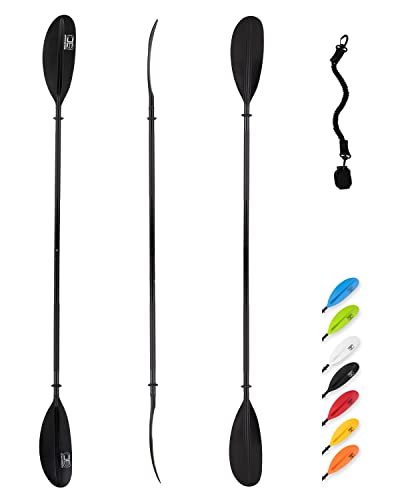
This guide cuts through marketing fluff and gets straight to what matters on the water. I'll walk you through the mechanical differences that actually affect your efficiency and comfort, compare blade materials that hold up in summer UV exposure, and help you match paddle specifications to your body and kayak setup. Whether you're planning flat-water recreational paddles, shallow-draft fishing expeditions, or casual exploration, you'll have the knowledge to pick a paddle that'll last multiple seasons and feel right in your hands.
Table of Contents
- Understanding Paddle Length and Kayak Width
- Blade Shape and Design for Summer Water Conditions
- Shaft Material: Fiberglass vs. Carbon vs. Aluminum
- Grip Comfort and Hand Positioning for Long Paddles
- Paddle Weight and Fatigue Over Extended Trips
- Matching Your Paddle to Activity Type
- Frequently Asked Questions
Understanding Paddle Length and Kayak Width
Paddle length isn't arbitrary—it's determined by your kayak's width and your height. Too short, and you'll develop a hunched, inefficient stroke that exhausts your shoulders; too long, and you'll catch the gunwales on the recovery phase. I've seen too many paddlers grab whatever's available and suffer for it. The standard formula is: kayak width + your reach length = approximate paddle length. For most warm-water kayaks in the 28-34 inch width range, most paddlers fall into the 220-240 cm range.
Here's the practical reality I've learned on the water: a 32-inch wide recreational kayak with a 5'10" paddler works best with a 230 cm paddle. That same paddler on a 24-inch fishing kayak (common for kayak fishing gear setups) would drop to 210-220 cm for a more controlled, precise stroke over shallow flats. If you're standing (fishing or exploring from a tall kayak seat), you may bump up 5-10 cm to account for the higher stroke plane. Summer heat can make you sloppy—paddles that are even 10 cm off optimal length cause micro-adjustments all day that accumulate into real shoulder fatigue by hour six.
Blade Shape and Design for Summer Water Conditions
Blade shape determines power delivery, catch feel, and recovery speed. Warm-water summer paddling typically means flat to small-chop conditions—not the demanding seas that roughwater touring paddles are engineered for. I evaluate blades on three factors: blade area, aspect ratio (length vs. width), and edge design. Larger blades (150-180 square cm) catch more water per stroke, ideal for recreational paddlers who prioritize easy power. Smaller, longer blades (higher aspect ratio) favor efficiency and lighter catch—better for fishing kayaks where precision and reduced splash matter.
Summer sun degrades blade materials. Carbon-reinforced nylon holds up better than pure plastic—it resists UV degradation and maintains rigidity in heat. Fiberglass blades offer a middle ground: durable, forgiving if you hit rocks or sandy bottoms, and they'll flex slightly to absorb impact. Pure foam-core fiberglass blades are lighter but can waterlog over seasons; avoid them for anything beyond casual recreational use. On warm flats where you're paddling 6+ hours, I prefer blades with a slight curve (not completely flat) that provide subtle feedback and reduce wrist strain during the catch phase.
Shaft Material: Fiberglass vs. Carbon vs. Aluminum
This is where most people make their mistake. Aluminum shafts are cheap but heavy (often 28-32 oz total), and in full sun they heat up enough to be uncomfortable gripping after a few hours—I've personally set aluminum paddles down at midday and felt the difference when picking them back up. Fiberglass shafts are the sweet spot for summer: mid-weight (20-24 oz), affordable, durable against scraping, and they don't conduct heat. Carbon shafts are lightest (16-20 oz) but pricey, and any structural damage (delamination, crack) can compromise the whole paddle. For a summer paddler on warm water, I recommend fiberglass unless you're doing this 100+ days per year and really feel the weight penalty.
Shaft flex matters more than most people realize. A completely rigid shaft (common in budget carbon) transfers all impact directly to your wrists and shoulders—fine for short trips, brutal over 6 hours. Mid-flex shafts (slight give on the power phase) absorb some shock and let your body settle into a rhythm. I test this by gripping the shaft near the blade and flexing it by hand; a good summer paddle has about 1-2 inches of give. Aluminum is actually too stiff; fiberglass's slight natural flex is a feature, not a weakness. Your grip area should also be slightly textured (ridged or wrapped)—smooth shafts become slippery with sun lotion and sweat within the first hour of summer heat.
Grip Comfort and Hand Positioning for Long Paddles
Your grip is where comfort either lives or dies on a 6-hour paddle. Warm water means warmer hands, more sweat, and reduced friction—so a T-grip or palm grip that works fine on a cool spring day can become a blister factory by July. I prefer slightly oversized grips (not thin racing grips) that distribute pressure across a larger hand surface. The T-grip is versatile: it locks your hand in place and suits most paddling styles. Palm grips (where your whole hand wraps around a wider diameter) are better for pure endurance—they feel like holding a baseball bat and reduce fatigue on the final hours.
Grip diameter matters more than people think. A paddle shaft with a 1.0-1.1 inch diameter is standard, but I recommend 1.1-1.2 inches for summer endurance paddling—it spreads grip force across more hand area and requires less clenching. Test this by holding a paddle for 15 minutes. If your fingers feel slightly fatigued or you're gripping hard, the diameter is too small. Your grip should feel passive, not active. Also check the grip padding: EVA foam (closed-cell) is better than open-cell foam because it sheds water and dries quickly. In sun, exposed foam can dry out and become slippery. A neoprene or rubberized palm pad adds about $5 but prevents that slick feel by mid-afternoon.
Paddle Weight and Fatigue Over Extended Trips
I've timed my summer paddles—a typical day is 3-5 hours with 2,000-3,000 paddle strokes. That's roughly 6,000-9,000 lbs of rotational force on your shoulders and wrists per day. Paddle weight compounds: even a 6 oz difference (roughly 1 lb over 8 ounces × 3,000 strokes per day) becomes real fatigue by hour 4. Light paddles (16-18 oz) are faster on energy, but they're fragile and expensive. Mid-weight paddles (20-24 oz) are durable and efficient—I notice almost no fatigue difference versus ultra-light on days up to 6 hours. Beyond 6 hours, I step up to carbon; beyond 8 hours, lightweight becomes non-negotiable for me.
Measure total paddle weight before you buy—manufacturers often list just the blade or shaft. A complete paddle in the 22-26 oz range is ideal for summer recreational paddling. Fishing kayak paddles should lean lighter (20-23 oz) because you're making precision strokes over shallow water where efficiency matters. If a paddle feels heavy when you pick it up at the shop, it'll feel like an anchor by hour 5 in the sun. Balance also matters: if the blade is too heavy relative to the shaft, your catch will feel sluggish. Pick the paddle up with one hand on the shaft and hold it horizontal—it should balance roughly in the middle. Off-balance paddles force micro-corrections that exhaust stabilizer muscles.
Matching Your Paddle to Activity Type
Recreational and touring paddles on warm flat water benefit from moderate blade area (150-165 sq cm) with a fairly flat face—they maximize distance-per-stroke without requiring explosive power. The perfect summer lake paddle has a forgiving catch (curved edge) and a smooth release. A kayak fishing paddle is different: you want something with a narrower blade (120-140 sq cm) that doesn't slap the water on the recovery phase, which spooks fish. Fishing paddles are also shorter (often 210-220 cm) for tighter tracking control in tight mangrove or shallow flats where long paddles get in the way. If you're fishing from a sit-on-top fishing kayak with tall kayak seats, your paddle might need an asymmetrical blade (one side of the blade face is more curved) to compensate for the higher grip hand position.
Whitewater paddles are engineered differently—they're shorter, stiffer, and have smaller blades for control in current. Don't grab a whitewater paddle for summer lake paddling; they'll wear you out because they resist bend and have aggressive blade shapes designed for power strokes in moving water, not efficiency over distance. Similarly, racing paddles have narrow blades and lightweight shafts optimized for flat water speed, but they're fragile and demanding—they suit competitive paddlers, not summer trip paddlers who might scrape a sandy bottom or dock. Match your paddle to your activity: recreational for casual trips, fishing-specific for shallow water, touring for long distances with gear loaded in dry bags and strapped to kay
Frequently Asked Questions
How do I choose the right kayak paddle length for my kayak?
Paddle length is determined by your kayak's width and your height—generally, wider kayaks require longer paddles (220-230cm) while narrower kayaks use shorter paddles (210-220cm). A good starting point is to multiply your kayak's width by 2.5 and add your height divided by 4, then adjust based on your paddling style and comfort.
What is the best kayak paddle material for warm water conditions?
Carbon fiber paddles are ideal for warm-water kayaking due to their lightweight, durability, and resistance to UV damage from sun exposure, though they're more expensive. Fiberglass offers a good mid-range option with solid performance, while aluminum shafts are budget-friendly but heavier and less durable for frequent summer use.
How do I choose between different blade shapes for summer kayaking?
Smaller, faster-recovery blades are best for recreational warm-water paddling and reduce fatigue, while larger blades provide more power for kayak fishing or longer trips. Consider your paddling pace and intended use—casual summer paddlers benefit from efficient blade designs, whereas anglers may prefer blades that allow quick directional changes.
Is it worth investing in a premium kayak paddle for recreational use?
Yes, investing in a quality paddle is worthwhile because it directly impacts your comfort, control, and endurance during long summer trips; a better paddle reduces arm fatigue and improves paddling efficiency. Entry-level paddles often feel heavier and less responsive, making premium options with carbon or quality fiberglass worth the extra cost for frequent kayakers.
How do I prevent my kayak paddle from getting damaged in summer sun?
Use a paddle leash to prevent loss and store your paddle in a shaded, dry location away from direct UV exposure when not in use. Consider UV-protective paddle covers or cases, and rinse your paddle with fresh water after saltwater or brackish water trips to prevent material degradation.
What paddle features are most important for kayak fishing in warm waters?
Look for paddles with lightweight construction for minimal fatigue during long fishing sessions, non-slip grips for wet hands, and blade designs that allow quick maneuverability to position your kayak near structures. A paddle leash is also essential for fishing to prevent accidental loss while handling gear or fish.


