

Kayak Paddles Vs Kayak Carts Which Should You
If you’ve ever spent twenty minutes wrestling a heavy fishing rig across a gravel parking lot or felt that sudden, sharp ache in your lower back after a long carry to the shoreline, you know that gear choice isn't just about preference—it's about survival on the water. In the kayaking world, we often face a fork in the road: do we invest in the tools that move us through the water, or the tools that get us to the water? This comparison looks at two essential but fundamentally different categories: kayak paddles and kayak carts. While they serve different purposes, they both represent the difference between a seamless adventure and a logistical nightmare.
This guide is designed for the paddler trying to balance a budget with the realities of 2026 gear standards. We aren't comparing apples to oranges; we are comparing two different halves of the kayaking experience. A high-performance paddle dictates your tracking, stability, and fatigue levels during a long trek, while a reliable cart determines whether you arrive at the launch site energized or exhausted. Whether you are a recreational paddler looking for a lightweight upgrade or a heavy-duty angler managing a 120-pound pedal-drive rig, understanding the technical trade-offs of these tools is vital to making a smart investment.
Affiliate disclosure: if you buy through these links, we may earn a commission at no extra cost to you.

Table of Contents
- Models in this comparison
- Quick Verdict
- About Kayak Paddles
- About Kayak Carts
- Head-to-Head: Purpose and Scope of Investment
- Head-to-Head: Durability and Material Integrity
- Head-to-Head: Terrain vs. Water Performance
- Who Should Choose Kayak Paddles?
- Who Should Choose Kayak Carts?
- Our Verdict
- Frequently Asked Questions
- Sources & References
Models in this comparison
Affiliate disclosure: if you buy through these links, we may earn a commission at no extra cost to you.

Quick Verdict
Choose Kayak Paddles if...
- You are looking for the primary tool used to actually propel your boat through the water.
- You need to consider blade material, shaft flex, and weight to manage fatigue during long paddles.
- You are deciding between recreational, fishing, or whitewater specific designs to match your hull and water conditions.
Choose Kayak Carts if...
- You need to solve the physical challenge of transporting heavy boats from your vehicle to the water's edge.
- You own a heavy fishing or pedal-drive rig where the combined weight of the boat and gear (tackle, coolers, etc.) makes hand-carrying impractical.
- You need a specialized design—such as scupper-hole carts or bunk-style trailers—to match your specific hull shape and terrain.
| Factor | Kayak Paddles (Component) | Kayak Carts (Accessory) |
|---|---|---|
| Comparison Scope
Note: This compares a primary propulsion component against a transport accessory. |
Essential for movement and control on the water. | Essential for transport from vehicle to water. |
| Primary Function | Propulsion, tracking, and steering. | Hauling, loading, and shore-to-water transport. |
| Best For | Every paddler (Recreational, Fishing, Whitewater). | Paddlers facing long distances from parking to launch. |
| Weight Impact | Directly affects fatigue and stroke efficiency. | Reduces physical strain of carrying heavy boats. |
| Key Advantage | The difference between a grueling day and a smooth glide. | Prevents back strain and protects the hull during transit. |
| Main Drawback | Does not assist with getting the boat to the water. | Does not assist with movement once on the water. |
About Kayak Paddles
When you're out on the water, your paddle is your engine, your rudder, and your primary connection to the elements. In the world of paddling, we aren't just looking at length; we are looking at the interplay between blade surface area, shaft flex, and weight distribution. For recreational paddlers, a lighter aluminum shaft might suffice for casual lake laps, but once you move into touring or whitewater, the material science becomes critical. A paddle with too much flex can feel "mushy" during a power stroke, while a rigid carbon fiber shaft offers immediate response but can be punishing on the joints during long-distance hauls.
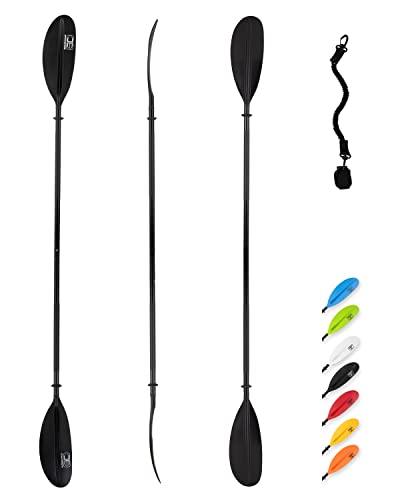
Choosing the right paddle requires matching the blade to your intended environment. If you are navigating tight rivers or technical whitewater, you need a blade that offers precise tracking and easy maneuvering. For open-water fishing or coastal touring, a larger blade surface area helps maintain momentum against wind and current. When evaluating options like the OCEANBROAD alloy shaft series or the heavy-duty Overmont models, consider how the weight of the paddle affects your fatigue levels over a four-hour session. A well-balanced paddle ensures that the transition from the catch to the power phase is seamless, preventing the repetitive strain that often plagues weekend warriors.
About Kayak Carts
While a paddle is an essential component of the kayak itself, a kayak cart is an essential component of the journey to the water. It is important to note that these two products serve entirely different purposes: one is a tool for propulsion, while the other is a tool for logistics. However, they are often compared in a "must-buy" context because they both represent significant investments in your ability to enjoy the water. A cart solves the physical burden of transporting heavy boats, especially as modern fishing rigs and pedal-drive models become increasingly heavy.
When selecting a cart, you must match the design to your specific hull and the terrain you face. For example, scupper-hole carts are specialized for certain hull shapes but may potentially void certain kayak hull warranties. Different designs, such as bunk-style trailers or lightweight folding dollies, are engineered for specific weight classes. It is a common mistake to look only at the weight of the empty boat; you must consider the total load, including tackle, coolers, and camping gear, which can significantly increase the base weight. For instance, while a 60-pound recreational boat is easy to carry, a 120-pound pedal-drive rig requires a much beefier frame to prevent collapse. High-capacity budget haulers, such as the VEVOR 450 lbs Heavy Duty Kayak Trailer, offer a different level of support compared to lightweight aluminum frames like the Rad Sportz models, which prioritize ease of transport over maximum load capacity.
Head-to-Head: Purpose and Scope of Investment
Before we dive into the technical specs, we have to address the elephant in the room: these two products aren't direct competitors, but they are both essential for a successful launch. A kayak paddle is a component of your propulsion system—it is what you use to move through the water—while a kayak cart is a transport tool used to move the boat from your vehicle to the shoreline. Because they serve entirely different functions, you aren't choosing one over the other; you are deciding how to allocate your gear budget for the 2026 season.
When comparing the two, you are essentially weighing "active" gear versus "logistical" gear. A high-quality paddle, like an OCEANBROAD alloy shaft model, directly impacts your tracking, stability, and physical fatigue during a long day on the water. A kayak cart, such as a VEVOR heavy-duty hauler, manages the heavy lifting of getting your boat—and the significant weight of added tackle, coolers, and camping gear—to the launch point. One gets you through the mission; the other gets you to the mission without ruining your back.
Head-to-Head: Durability and Material Integrity
When looking at paddles, durability is measured by shaft flex and blade resilience. For example, heavy-duty aluminum shafts like those from Overmont are designed to handle the rigors of recreational and fishing use, providing a rigid feel that translates power to the water. In contrast, the durability of a kayak cart is measured by its ability to support the total load weight. As noted by Outdoor Gear Notes, the weight of a kayak can increase significantly once you add gear, so a cart must be able to handle the base weight of the boat plus the extra hundred pounds of equipment you're hauling.
The failure points are also vastly different. A paddle might fail due to a cracked blade or a weakened shaft under heavy whitewater or wind loads. A cart, however, faces the risk of frame collapse. According to Outdoor Gear Notes, buying the cheapest option available can lead to frame collapse when transporting heavy fishing kayaks. While a cheap paddle might feel "mushy" during a stroke, a cheap cart can lead to a dropped hull or a broken frame halfway down a gravel trail. In both cases, investing in beefier materials—like the aluminum frames seen in modern 2026 cart designs—is the difference between a successful trip and a gear failure.
Head-to-Head: Terrain vs. Water Performance
The performance of a paddle is felt in the water. You are looking at how the blade material handles the resistance of the water and how the shaft flex affects your stroke efficiency over long distances. A paddle is your primary interface with the environment. If you are fishing, you need a paddle that won't interfere with your casting; if you are touring, you need something that aids in efficient tracking. The "terrain" for a paddle is the water itself, and its performance is judged by how much effort it takes to maintain your course.
The "terrain" for a kayak cart is the ground between your truck and the water. Different designs are engineered for specific environments: scupper-hole carts are specialized for certain hull shapes, while bunk-style trailers or lightweight folding dollies serve different needs. According to Paddle Round The Pier, testing for carts involves navigating everything from sand and gravel to rocky shorelines. While a paddle's performance is about the efficiency of your movement, a cart's performance is about the ease of your transit. A mismatch in either—a heavy, inefficient paddle or a cart that can't handle a gravel path—will result in a much more exhausting day on the water.
Who Should Choose Kayak Paddles?
Before we dive into the comparison, it is important to note that we are looking at two entirely different categories of gear. A kayak paddle is a primary propulsion tool—it is the engine of your boat—while a kayak cart is a transport solution used to move your boat from the vehicle to the water. You don't choose between them; you use them in tandem. However, if you are deciding how to allocate your gear budget for the 2026 season, understanding the necessity of each is key.
You should prioritize investing in high-quality kayak paddles if your current setup is causing fatigue or if you are moving into more demanding water environments. For those transitioning from recreational paddling to whitewater or coastal touring, the right paddle—focusing on blade shape, shaft flex, and weight—is critical for tracking and efficient power transfer. If you are spending long hours on the water, a paddle with the right material balance is essential for preventing shoulder strain and ensuring comfort over long distances.
Who Should Choose Kayak Carts?
You should choose a kayak cart if your primary challenge is the "last mile"—the trek from your parking spot to the shoreline. As modern kayaks grow wider and heavier, especially with the rise of fishing and pedal-drive models, carrying a boat by hand is a fast track to a ruined back or a dropped hull. A cart is an essential investment for anyone dealing with heavy loads.
The right buyer needs to match the cart to their specific boat and terrain. If you own a heavy fishing kayak, you need a high-capacity hauler like the VEVOR 450 LBS Heavy Duty Kayak Trailer, which is categorized as a high-capacity budget hauler. For those with lighter boats, a lightweight folding dolly or a design like the Rad Sportz Kayak Cart—which features a powder-coated aluminum frame and polyurethane tires—might be more manageable. Remember that the weight of your boat increases significantly once you add tackle, coolers, and camping gear; if your total load exceeds the cart's capacity, you risk frame collapse or stability issues. If you are hauling a heavy rig, choose a cart designed for that weight class to avoid the mistakes of buying the cheapest option available.
Our Verdict
If you are looking at this comparison and wondering which one to buy, you are likely facing a "chicken or the egg" dilemma: do you invest in the tool that moves you through the water, or the tool that moves you to the water? Because these are two entirely different categories of gear—one being a primary propulsion system and the other a transport solution—the answer depends entirely on your current setup and your immediate pain points.
The Case for Kayak Paddles: If you are currently using a cheap, heavy, or poorly fitted paddle, buy the paddle first. In the world of paddling, the connection between your body and the water is everything. A high-quality paddle with the right shaft flex and blade material affects your tracking, your fatigue levels, and your ability to maneuver in technical whitewater or heavy currents. If your current paddle is causing shoulder strain or making your strokes feel sluggish, no amount of cart-hauling ease will make your time on the water enjoyable. A quality paddle is an investment in your physical longevity as a paddler.
The Case for Kayak Carts: If you already own a reliable paddle but find yourself dreading the walk from the parking lot to the shoreline, buy the cart. As modern kayaks—especially heavy fishing and pedal-drive rigs—grow in weight and width, the physical toll of manual portaging increases. A cart is a quality-of-life upgrade that prevents back injuries and keeps your gear from hitting the dirt. However, remember the expert warning: do not buy the cheapest budget option just to save a few dollars. As seen in real-world testing, a cheap frame can collapse under the weight of a loaded fishing rig, turning a "convenient" tool into a broken mess on a gravel trail.
The Bottom Line: If you are a beginner, prioritize the paddle. It is your primary interface with the water. If you are an experienced paddler with a heavy-duty setup, prioritize the cart to manage the logistical heavy lifting. Just ensure that whatever you choose, you match the specs to your specific boat—whether that means choosing a specialized scupper-hole design or a heavy-duty frame capable of handling your fully loaded gear weight.
Frequently Asked Questions
Should I buy a paddle or a cart first?
This isn't an apples-to-apples comparison because they serve different purposes. A paddle is your primary propulsion—essential for every single time you hit the water. A cart is a transport solution designed to save your back during the trek from the parking lot to the shoreline. If you can already carry your boat comfortably, prioritize a high-quality paddle with the right shaft flex and blade material for your discipline. If your boat is heavy or the terrain is rough, a cart becomes a necessity for long-term physical health.
How much weight should I actually account for when choosing a cart?
Don't just look at the weight of your empty kayak. A common mistake is buying a cart based on a 60-pound recreational boat, only to find it buckling when you add 40 pounds of tackle, coolers, and camping gear. Always consider the total load weight—the combined weight of the boat and all your gear—to ensure the frame and wheels can handle the real-world stress of a loaded rig.
Will a scupper-hole cart damage my kayak?
Scupper-hole carts are specialized for certain hull shapes, but they can potentially void certain kayak hull warranties. Before you commit, check with your manufacturer to ensure that inserting prongs into your scupper holes is permitted under your warranty terms.
What should I look for in a heavy-duty kayak cart?
For heavy fishing kayaks or pedal-drive rigs, look for beefier aluminum frames and robust wheel technology. According to Outdoor Gear Notes, the VEVOR 450 LBS Heavy Duty Kayak Trailer is categorized as a high-capacity budget hauler, making it an option for those needing significant capacity. Avoid the temptation of the cheapest possible option; cheap materials can lead to frame collapse when transporting heavy fishing kayaks across uneven terrain.


